Showing posts with label Aquileia. Show all posts

Sunday, September 14, 2014

Double Head = Doble Popes [P2] = THE WORLD

>
Vladimir Putin or ...... a coming Vladimir Romanov

Vladimir - Vladi (rule[r])  Mir (peace OR world)   Romanov (of Rome)

      Vladimir                                Romanov
[ruler of the world]                  [from Rome]
     
by C. Stiliyanov in:


петък, 12 септември 2014 г.
Bridges east
http://jesus-partisans-balkans.blogspot.it/2014/09/bridges-east.html


 *   *   *


     Above image - Christo Stiliyanov is confirmed even by the fashion and stylists and garment industry, the brainwash for the Big Enlargement, the End of 1054 Schism and the consequent Roman Catholic global crusade is so deep that no corner of social or individual life is spared - photo taken day 13 Sept 2014 at 06:43 (of course with the consent of the man wearing the jacket). About in the same time when pope Francis SJ was preparing to go to monumental cemetery in Redipuglia to commemorate the dead soldiers of WW1.


     The pope spoke at Redipuglia [see below] just some hours later after I took the photo with Double-head Eagle + THE WORLD.


Image in: Beware of 13th September [upgraded with YELLOW & WHITE colors]


"....Pope Francis: World War III Is Already Here

 REDIPUGLIA, Italy (AP) — Pope Francis urged the world Saturday to shed its apathy in the face of what he characterizes as a third world war, intoning “war is madness” at the foot of a grandiose monument to soldiers killed in World War I.
Francis’ aim in recalling those who died in the Great War that broke out 100 years ago was to honor the victims of all wars, and it came at a time when his calls for peace have grown ever more urgent amid new threats in the Middle East and Ukraine.


3 коментара:

http://en.wikipedia.org/wiki/John_Chrysostom

The Orthodox and Eastern Catholic Churches honor him as a saint and count him among the Three Holy Hierarchs, together with Basil the Great and Gregory Nazianzus. He is recognized by the Eastern Orthodox Church and the Catholic Church as a saint and as a Doctor of the Church. Churches of the Western tradition, including the Roman Catholic Church, some Anglican provinces, and parts of the Lutheran Church, commemorate him on 13 September.

Today 13 september the pope celebrated mass at monumental cemetery of Redipuglia (with the rests of 100,000 Italian soldiers) here about 20 km far from Trieste city, giving culprit for the wars to the "merchants of weapon" and admitting that now it is raging the III Thirty Years war/War for Catholicization of Eurasia (he spoke about a "WW3" which is fought "in pieces").....:

http://www.youtube.com/watch?v=wPcJIRYUcxk

"........Published on Sep 13, 2014

A Redipuglia, the Pope celebrated Mass in Italian military memorial, and prayed in the cemetery near the Austro-Hungarian Empire, 100 years after the First World War. The conversion of the heart, he said is to go from that "To me that matters" to cry, for all the victims of the madness of war.

"War is a madness, and God brings forth His creation, war destroys." It destroys the human being and distorts everything, even the bond between brothers. So Papa Francesco, in the homily of the Mass celebrated in the shrine of military Redipuglia, in front of more than ten thousand faithful at the foot of the monumental steps resting place of one hundred thousand Italian soldiers killed in the First World War. In occasio .............."
ОтговорИзтриване


"........The bear and the scallop-shell-- a unique papal coat of arms
April 27, 2005
An especially distinctive element in the new papal coat of arms is a bear with a pack-saddle, the so-called “Bear of Corbinian." There is a charming legend involving a bear that is told about Bishop Corbinian, who preached the Christian faith in the ancient Duchy of Bavaria in the 8th century and is honored as the spiritual father and patron of the archdiocese. It is said that while he was traveling to Rome a bear mauled his pack-animal. The saint then rebuked the wild beast, and commanded the bear to carry his packs to Rome. Once he arrived there, however, he let the bear go, and it lumbered back to its native forest. The meaning of the legend is clear: Christianity tamed and domesticated the ferocity of paganism and thus laid the foundations for a great civilization in the Duchy of Bavaria. At the same time, Corbinian’s Bear, as “God’s beast of burden,” symbolizes the burden of office. In the coat of arms of Benedict XVI, the Bear of Corbinian has now taken up permanent residence in Rome. .........."
http://www.catholicculture.org/news/features/index.cfm?recnum=36801

     And now take in consideration about two bears found killed in Italy - I remember the case of the bear killed in BAVARIA years ago and pope Ratzinger having a BEAR in his coats of arm, I sent some posts to the old Unhived Mind seven years ago, now....2 BEARS:


Open Letter about the killing of the bear Daniza
September 11, 2014
The bear
Daniza was killed . It 's over in the worst way the life of the bear and her cubs. We did what we humans are capable of doing very well - kill.
We kill in absurd wars, hunting, kill in slaughterhouses, laboratories. We kill for religion, for interest, for oppression, for conquest, for pride. Even for simple pleasure. We learn to do so from an early age, no one teaches us tolerance, peace, acceptance, respect for other lives.
We do that and nothing else. The culture, intelligence, that '"humanity" of which we pride ourselves as an attribute inherent to our species is in fact the negation of what you mean, rather, the opposite. There is no greater than that of the human brutality.

http://firenze.repubblica.it/cronaca/2014/09/11/news/lettera_aperta_sull_uccisione_dell_orso_daniza-95505724/ 


Abruzzo, after Daniza another dead bear. "It 's been poisoned." Follow CHANNEL ANIMAL
L'Aquila, 12 September 2014
The carcass of the animal found in the countryside of Pettorano on Gizio. From the month of August would be two bears to have made inroads in the area.
http://www.quotidiano.net/orso-abruzzo-trovato-1.202663#1
 
     Just only few days before the celebration of Chrysostom at Redipuglia, on 13th September???

     Bears.....:

"....The Russian Bear is stronger and more powerful than it has ever been before.  Sadly, most Americans don't understand this.  They still think of Russia as an "ex-superpower" that was rendered almost irrelevant when the Cold War ended.  And yes, when the Cold War ended Russia was in rough shape.  I got the chance to go over there in the early nineties, and at the time Russia was an economic disaster zone....."

The Rise Of The Bear: 18 Signs That Russia Is Rapidly Catching Up To The United States

By Michael Snyder, on August 7th, 2013 
Above image - taken from an article which quoted the previous one: Thursday, August 15, 2013 - Watch out for that bear!


Saturday, June 7, 2014


13th September, Jesuit pope near Trieste to launch a message on the RED LINE. 

http://avles-theamberpath.blogspot.it/2014/06/13th-september-jesuit-pope-near-trieste.html

Thursday, September 11, 2014


Western-Eastern Roman Empire 101 

http://continuingcounterreformation.blogspot.it/2014/09/western-eastern-roman-empire-101.html

Tuesday, September 2, 2014


"From the face of the serpent" 

http://control-avles-blogs.blogspot.it/2014/09/from-face-of-serpent.html

Sunday, July 13, 2014

Obsessed with the Flood 8 - two millenniums long bridge

>

Two popes - two millenniums  - a bridge with Herod.

Two thousands years after the first pope of Vatican, Satanic Augustus: Satanic pope Francis...:

Above image - the cover of the last issue of "il venerdì di Repubblica", 
number of issue 1373, 11th July 2014


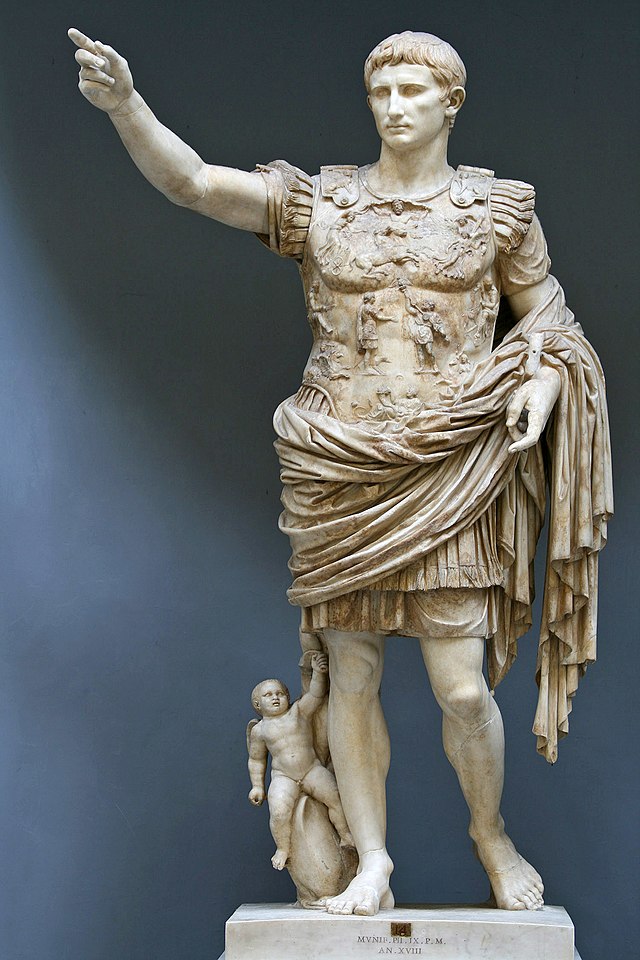
Above image - "The statue known as the Augustus of Prima Porta, 1st century" 
URL: http://en.wikipedia.org/wiki/Augustus#mediaviewer/File:Statue-Augustus.jpg

"...Augustus (Latin: Imperator Caesar Divi F. Augustus,[note 1] 23 September 63 BC – 19 August 14 AD) was the founder of the Roman Empire and its first Emperor, ruling from 27 BC until his death in 14 AD....". [Wikipedia]


Above image - Obsessed with the Flood - 6 


........


"...July 11, 2014
 .... Amiternum. A village of the ancient Sabines (the ones in which the future Romans tore the women according to legend) became the imperial age in a major urban center. From here starts a show which will begin on July 11 in Chieti to celebrate the two thousand years since the death of Augustus. Entitled "Augustan Ages, messages from Amiternum and Abruzzo Antico" offers a path between the elements that testify to the artistic language common between the province and Rome in the years after the  Republican age will be exposed, for example, a beautiful head of Augustus basalt from Pescina, a bed in bronze found in a tomb that perfectly reproduces the couches of the imperial age, insignia of the legionaries and sculptures. The exhibition was organized by the Ministry and by the Superintendent in collaboration with the Fondazione Cassa di Risparmio in Chieti Francesca Sironi..... © All rights reserved......"
URL:  http://espresso.repubblica.it/foto/2014/07/01/galleria/la-mostra-di-chieti-per-i-due-secoli-di-augusto-1.171488#1


"..18/06/2014 - 10:05
...RIMINI. A bridge over the empires. 14-2014 two thousand years of history is the title Ancient / This, the 16th edition of the festival "bridge" between classical and contemporary culture, who returns to Rimini 20 to 22 June.
The street was the theme of the past year, a hit from 5000 admissions. Bridge is the key word of this festival, which will celebrate two of two millennia: that the bridge over the river Marecchia wanted by the Emperor Augustus in the year of his death (14 AD) and completed by his successor, Tiberius, and the fact of the death of Augustus. A three-day not to be missed, including exhibitions, meetings, workshops for children. To realize this, the City has allocated a budget of 40,000.
June 20: is a party to the 2000 years of Tiberius' Bridge
......."

From:  http://www.corriereromagna.it/news/cultura-spettacoli/5058/Rimini--un-ponte-oltre-gli.html


     Note also on how we are approaching the 100th anniversary of the start of the First World War which was a step in the submission of the European sub-continent to the Pontifex Maximus of Rome, we have again pedophilia as allegorical reminder of the cannibal devouring of children in the pagan-satanist rite of "devouring of the seed of the woman" [see this also as attack to the land of the King James Bible]:


England: Land of Royals, Tea and Horrific Pedophilia Coverups


2% of Clergy Are Pedophiles: Pope Francis

By Matt Cantor,  Newser Staff
 Pontiff hints at possible changes to priest celibacy

Posted Jul 13, 2014 8:31 AM CDT 


      Devourers of children. Did the scandal of pedophilia exploded in order to put shadow on the pedophilia in the Catholic church?  And: right now, in a sort of planned synchrony with the theme of the abuse of children in the Catholic church and other sectors of the s.c. civil society, there's war between Israel and Nazi-Islamic Hamas, where the clear duty of Hamas in front of the emperor is to cause the maximization of deaths among the infant population of Arab Muslims in "Palestine". Isn't this true pedophilia? 
     As the vicarious of Tammuz in Rome is not able to destroy Israel, Satan, his master, notwithstanding can destroy her moral image all around the world: presenting Israel again as guilty for another Massacre of the Innocents.  "Islamic" Hamas offers his children to the bombs of Israel like her ancestors of Chaldea were offering their children to the knives of their Chaldean-Babylonian priesthood:

" When Christ was born in Bethlehem, no doubt Herod endeavoured to cut Him off, and Herod was a subject of the Roman Empire. But it was not from any respect to Caesar that he did so, but simply from fear of danger to his own dignity as King of Judea. So little did Caesar sympathise with the slaughter of the children of Bethlehem, that it is recorded that Augustus, on hearing of it, remarked that it was "better to be Herod's hog than to be his child." (MACROBIUS, Saturnalia)
(............)
* OVID, Metam. So deeply was the idea of "the seed of the serpent" being the great World-king imprinted on the Pagan mind, that when a man set up to be a god upon earth, it was held essential to establish his title to that character, that he prove himself to be the "serpent's seed." Thus, when Alexander the Great claimed divine honours, it is well known that his mother Olympias, declared that he was not sprung from King Philip, her husband, but from Jupiter, in the form of a serpent. In like manner, says the authoress of Rome in the 19th Century, the Roman emperor, "Augustus, pretended that he was the son of Apollo, and that the god had assumed the form of a serpent for the purpose of giving him birth.""
[Alexander Hislop in his The two Babylons]
 
"......In view of such executions, the emperor Augustus reportedly quipped, “It is better to be Herod’s pig than son” (Macrobius, Saturnalia, 2:4:11)—the joke being that, since Herod was a Jew, he didn’t eat pork and his pig would be safe........"
URL:  http://www.catholic.com/blog/jimmy-akin/it-is-better-to-be-herods-pig-than-son

  
"........Augustus (Latin: Imperator Caesar Divi F. Augustus,[note 1] 23 September 63 BC – 19 August 14 AD) was the founder of the Roman Empire and its first Emperor, ruling from 27 BC until his death in 14 AD.[note 2]
He was born Gaius Octavius into an old and wealthy equestrian branch of the plebeian Octavii family. Following the assassination of his maternal great-uncle Julius Caesar in 44 BC, Caesar's will named Octavian as his adopted son and heir. Together with Mark Antony and Marcus Lepidus, he formed the Second Triumvirate to defeat the assassins of Caesar. Following their victory at Philippi, the Triumvirate divided the Roman Republic among themselves and ruled as military dictators.[note 3] The Triumvirate was eventually torn apart under the competing ambitions of its members: Lepidus was driven into exile and stripped of his position, and Antony committed suicide following his defeat at the Battle of Actium by Augustus in 31 BC.

(........)
In 52 or 51 BC, Julia Caesaris died. Octavius delivered the funeral oration for his grandmother.[8] From this point, his mother and stepfather took a more active role in raising him. He donned the toga virilis four years later,[9] and was elected to the College of Pontiffs in 47 BC."
URL: http://en.wikipedia.org/wiki/Augustus

"..........After Julius Caesar's assassination in 44 BC, his ally Marcus Aemilius Lepidus was selected as Pontifex Maximus. Though Lepidus eventually fell out of political favor and was sent into exile as Augustus consolidated power, he retained the priestly office until his death in 13 BC, at which point Augustus was selected to succeed him and given the right to appoint other pontifices. Thus, from the time of Augustus, the election of pontifices ended and membership into the sacred college was deemed a sign of imperial favour.[3] With this attribution, the new office of Emperor was given a religious dignity and the responsibility for the entire Roman state cult. Most authors contend that the power of naming the Pontifices was not really used as an instrumentum regni, an enforcing power.......".
URL: http://en.wikipedia.org/wiki/Pontifex_Maximus#Roman_Empire


"......
When Tertullian, a Montanist, furiously applied the term to some bishop with whom he was at odds (either Pope Callixtus I or Agrippinus of Carthage),[28][29] c 220, over a relaxation of the Church's penitential discipline allowing repentant adulterers and fornicators back into the Church, it was in bitter irony:
In opposition to this [modesty], could I not have acted the dissembler? I hear that there has even been an edict sent forth, and a peremptory one too. The "Pontifex Maximus," that is the "bishop of bishops," issues an edict: "I remit, to such as have discharged [the requirements of] repentance, the sins both of adultery and of fornication." O edict, on which cannot be inscribed, "Good deed!" ... Far, far from Christ's betrothed be such a proclamation!
—Tertullian, On Modesty ch. 1
........"
URL: http://en.wikipedia.org/wiki/Pontifex_Maximus


  To testify that Tertutllian, after 1800 years is fully right about fornication & the church of Rome, go the first picture, the one of il venerdì di Repubblica on the top of the post:

https://blogger.googleusercontent.com/img/b/R29vZ2xl/AVvXsEi7fcmr5kG3RJrH3m7NNqKWw2VK1LoIqRF_NYHGPxZHI4dv9_8yjJmStw6nHii6DNWS3JWzekts2wVWoipocShio4QJCoxinet1VpzeTE2XLe0U4H1wwphworxy5Vi2lOFagfr4FMiPfjF2/s1600/DSCF2917.JPG

    You have four titles (four horsemen) over the head of pope Francis SJ - emperor, the first is telling you about the "sexual discrimination" among homeless in USA, the second talks about a 'revolution' occurring in the Italian jails, some reforms in order to alleviate the oppression of prisoners, the third tell you about a porn actor, Rocco Siffredi, who now claims to be entirely "porn & family"; the fourth title is again an attack to America like the first, about an interview Irvine Welsh , from Trainspotting and the vices of America. Tertullian has been vindicated.


      Bridges, between the Old World and the New World, of course for the evilness of Satan:


Above image - the cover of the book "JANTARSKA POT" or "THE AMBER PATH" of Lucijan Vuga.


Above image - excerpt from page 48 of the book JANTARSKA POT


"..........When empeor August divided Italy in 11 provinces (about when it precisely happened, the historians are not of the same opinion, the dates oscillate inside the interval of the first 30 years of our age), Oglej [Aquileia] became the capital of the tenth province, Venetia and Histria, where he [Augustus the emperor] for a certain time moved in order to better acquaintain with the establishment of the Eastern borders and...."

Above image - excerpt from page 49 of the book JANTARSKA POT


".....and to control the operations against the Pannonians. As interesting fact we mention that about in the 12th year before our age, he [emperor Augustus] was visited by Herod king of Jews.....".

     And there's also the anedocte of the wife of Augustus, Livia, who enjojed the wine "pucino" (read: pucine = from rocks?), [wine] which they don't know frome where they 've got it, but about that they suppose not far from there.

     That suggets us the idea to make a parallel between the wine "pucin" and the castle "Pucin"...But the division of the empire in provinces was due not so much to the administrative initiative as the will of rehabilitation of different people [nations], living inside the giant state [Roman empire].
     Let's go further with the missing bridge [ancient bridge on river Isonzo/Soca built by Romans, the "Ponte Sonti", argument of the quoted chapter of the book]. Oglej [Aquileia] for long time conserved the important role of bulwark on the east also in the later age when the empire showed clear signs of...." etc. etc.


Any hint for this now?

Monday, May 19, 2014

pope Francis S.J., for friends aka: Moloch?.

       Murders and abuses on children, a continue Satanic rite to rebel against the God's words of Genesis 3:15?
 And I will put enmity between thee and the woman, and between thy seed and her seed; it shall bruise thy head, and thou shalt bruise his heel.  [KJV]
     
       As Pontifex Maximus and depositary of the inner secrets of the heathen creed, emperor Augustus had perfect knowledge about the true significance of the abuse and murder of children, both ritual as well not ritual.


     Of course the name of the wine "Pucino" comes from the Slovenian "pecine" which means cliffs, like the cliffs near Trieste, on the sea, where till fifty years ago Slovenes cultivated special qualities of wine, and where it was grown the quality of wine "Pucino".


     But what interest here is to see the strict relations of the god-emperor Augustus with the future serial killer of children, Herod. And the supersessionist linke between them. The comment of Augustus about the Massacre of Innocents, smells more, than to be an accuse, a diplomatic way to not openly appear in public as religiously involved, an hypocrisy of the gentile pharisaic emperor. The first god-emperor, the first pope, the first builder of the EUROPEAN COMMUNITY.

     See Oglej/Aquileia in the excerpt from:

  http://www.whatsaiththescripture.com/Voice/History.Protestant.v1.b1.html#CHAPTER%205

"..........Rufinus, of Aquileia, first metropolitan in the diocese of Milan, taught substantially the same doctrine in the fifth century. His treatise on the Creed no more agrees with the catechism of the Council of Trent than does the catechism of Protestants.[7] His successors at Aquileia, so far as can be gathered from the writings which they have left behind them, shared the sentiments of Rufinus.

..........."  
Quoted in my : http://control-avles-blogs.blogspot.it/2014/06/anabaptist-bread-with-catholic-leaven.html


     God, after the there sojourn of the Satanic Augustus and his friend Herod, wanted to purify Oglej/Aquileia from the syphilis of Satan giving the city a true Christian ardour. Today everyone needs to be cleaned from the figure of the Pontifex Maximus, who dulls the mind to render them an easy gate for the legions of Satan because "the time is short"  - be prepared and don't fall in the trap:


Monday, June 30, 2014


Obsessed with the Flood 7 - Immigrants suffocate - to let Satan breath

Tuesday, June 24, 2014

Anabaptist bread. With Catholic leaven.


>

   And he charged them, saying, 

Take heed, beware of the leaven of the Pharisees, and of the leaven of Herod. 

Mark 8:15, KJB


 *    *    *

How you can be more a deceiver?

 [My Italic, parenthesis, question marks].


"....... In 1184, they were included in a papal decree against dangerous heretics and became subject to anti-heresy legislation, despite lack of evidence [???] that they were unorthodox. But repression was patchy, depending on the interest of the authorities. (.....)....


Gradually tensions appeared within the movement. Valdes hoped for reconciliation with the Catholic Church [???] and having a reforming influence in it....(....)....


Somewhat surprisingly, many retained devotion to Mary [???], despite the teachings of their leaders. ....(.....).....


On baptism, there was uncertainty. They were not fully convinced infant baptism was biblical or appropriate, but they seem rarely to have abandoned it. [???] .....".


Source: http://www.anabaptistnetwork.com/waldensians


Written by:

 Stuart Murray Williams

Tutor in Mission

 Stuart spent 12 years as an urban church planter in East London and has continued to be involved in church planting as a trainer, mentor, writer, strategist and consultant. For 9 years he was Oasis Director of Church Planting and Evangelism at Spurgeon’s College, London. Since then, under the auspices of the Anabaptist Network, he has worked as a trainer and consultant, with particular interest in urban mission, church planting and emerging forms of church. He is the founder of Urban Expression. He has written books on church planting, urban mission, emerging church, the challenge of post-Christendom and the Anabaptist tradition.

URL: http://www.bristol-baptist.ac.uk/content/stuart-murray-williams-0


They "...seem rarely to have abandoned it"??...:


 ".... Not only is there a lack of affirmation of a belief in infant baptism among the early Waldenses, but there is evidence that they openly rejected that doctrine. Everts says:


The creed of the Bohemian Waldenses published in 1532 (quoted by Sterck) is equally explicit on this point of dispute: "It is clear as day that infant baptism does no good, and is not ordered by Christ, but invented by man. Christ wants His baptism based upon His word for the forgiveness of sins, and then He promises, he that believeth and is baptized shall be saved.” [19]


Says Orchard:


Jacob Merning says that he had, in the German tongue, a confession of faith of the Baptists, called Waldenses, which declared the absence of infant baptism in the early churches of these people, that their forefathers practised no such thing. . . . [20]

URL: http://www.abaptistvoice.com/English/Books/Waldenses.htm#Chapter-2


    It is interest in the Roman Catholicism to present the true Christians contesting her blasphemies as "born from the void", without any form of lineage coming from the early Christians and the Apostolic tradition. Therefore Waldenses or Vaudoises, for the desire of the popes, were only a “sect” born just only from the mystical experience of a rich man, Waldo, who made out of himself poor in order to “discover” Christian values. 

    The true interest of the Catholic church, a concentrate of prostitution and abomination, is the haunt of the Christians, to destroy them as ordered by Satan. Therefore the vigorous exposition of the practice of the Roman Catholicism, the mass, the pedo-baptism, the confession, the popery and millions of other nails they everyday try to fix in the Jesus Crhist's body, (His church of the true believers), has NOT to be presented as the product of the transmission of the true doctrines of eternal life directly from the Apostolic age. If the Waldenses originated from Waldo, it means there was no one before him and like him, and therefore the only presence, from the Apostolic age, ought to be the one of the church of Rome. Conclusion: if there was present only the church of Rome, it is natural consequence to consider her (false) teaching as the “true Christian doctrine”.

    Satan has many bakers ready to cook his evil bread in the most different shapes, also the “anti-Catholic” ones, because no one then will imagine it containing his leaven. 


    To be convinced about this, read James A. Wylie in his “The history of Protestantism”, Volume first, book first, about the early Italian Christians of the late ancient age. How is it possible that pastors  like Stuart Murray Williams don't make the least hint to this early story of Christian struggle against Catholic apostasy, and how the Jesus Christ's doctrine could have been preserved all along the centuries, directly from the Apostolic age, also inside the valleys and on the mountains of the Alps and then everywhere in the Central Europe? A true Anabaptist believer must have interest in to consider his/her belief as the true genuine one, of the first hour, flowing directly from Jesus Christ's grace, because the true sect created by men and inspired by Satan, here, is the one of Rome and not of the Anabaptists:


 "...... The Nobla Leycon, which dates from


the year 1100, [3] goes to prove that the


Waldenses of Piedmont did not owe their rise


to Peter Waldo of Lyons, who did not appear


till the latter half of that century


(1160)............"

by James A. Wylie

 The History of Protestantism

 by James A. Wylie (1808-1890)

 CHAPTER 5 [exceerpt]

MEDIAEVAL PROTESTANT WITNESSES.

 http://www.whatsaiththescripture.com/Voice/History.Protestant.v1.b1.html#CHAPTER%205

 [my note, of avles: Aquileia town of Rufinus is about twenty kilometres from my town]

 Ambrose of Milan – His Diocese – His Theology – Rufinus, Presbyter of Aquileia – Laurentius of Milan – The Bishops of the Grisons – Churches of Lombardy in Seventh and Eighth Centuries – Claude in the Ninth Century – His Labors – Outline of his Theology – His Doctrine of the Eucharist – His Battle against Images – His Views on the Roman Primacy – Proof thence arising – Councils in France approve his Views – Question of the Services of the Roman Church to the Western Nations. 


The apostasy was not universal. At no time did God leave His ancient Gospel without witnesses. When one body of confessors yielded to the darkness, or was cut off by violence, another arose in some other land, so that there was no age in which, in some country or other of Christendom, public testimony was not borne against the errors of Rome, and in behalf of the Gospel which she sought to destroy.


The country in which we find the earliest of these Protesters is Italy. The See of Rome, in those days, embraced only the capital and the surrounding provinces. The diocese of Milan, which included the plain of Lombardy, the Alps of Piedmont, and the southern provinces of France, greatly exceeded it in extent.[1] It is an undoubted historical fact that this powerful diocese was not then tributary to the Papal chair. "The Bishops of Milan," says Pope Pelagius I. (555), "do not come to Rome for ordination." He further informs us that this "was an ancient custom of theirs."[2] Pope Pelagius, however, attempted to subvert this "ancient custom," but his efforts resulted only in a wider estrangement between the two dioceses of Milan and Rome. For when Platina speaks of the subjection of Milan to the Pope under Stephen IX.,[3] in the middle of the eleventh century, he admits that "for 200 years together the Church of Milan had been separated from the Church of Rome." Even then, though on the very eve of the Hildebrandine era, the destruction of the independence of the diocese was not accomplished without a protest on the part of its clergy, and a tumult on the part of the people. The former affirmed that "the Ambrosian Church was not subject to the laws of Rome; that it had been always free, and could not, with honor, surrender its liberties." The latter broke out into clamor, and threatened violence to Damianus, the deputy sent to receive their submission. "The people grew into higher ferment," says Baronius;[4] "the bells were rung; the episcopal palace beset; and the legate threatened with death." Traces of its early independence remain to this day in the Rito or Culto Ambrogiano, still in use throughout the whole of the ancient Archbishopric of Milan.


One consequence of this ecclesiastical independence of Northern Italy was, that the corruptions of which Rome was the source were late in being introduced into Milan and its diocese. The evangelical light shone there some centuries after the darkness had gathered in the southern part of the peninsula. Ambrose, who died A.D. 397, was Bishop of Milan for twenty-three years. His theology, and that of his diocese, was in no essential respects different from that which Protestants hold at this day. The Bible alone was his rule of faith; Christ alone was the foundation of the Church; the justification of the sinner and the remission of sins were not of human merit, but by the expiatory sacrifice of the Cross; there were but two Sacraments, Baptism and the Lord's Supper, and in the latter Christ was held to be present only figuratively.[5] Such is a summary of the faith professed and taught by the chief bishop of the north of Italy in the end of the fourth century.[6]

Rufinus, of Aquileia, first metropolitan in the diocese of Milan, taught substantially the same doctrine in the fifth century. His treatise on the Creed no more agrees with the catechism of the Council of Trent than does the catechism of Protestants.[7] His successors at Aquileia, so far as can be gathered from the writings which they have left behind them, shared the sentiments of Rufinus.

To come to the sixth century, we find Laurentius, Bishop of Milan, holding that the penitence of the heart, without the absolution of a priest, suffices for pardon; and in the end of the same century (A.D. 590) we find the bishops of Italy and of the Grisons, to the number of nine, rejecting the communion of the Pope, as a heretic, so little then was the infallibility believed in, or the Roman supremacy acknowledged.[8] In the seventh century we find Mansuetus, Bishop of Milan, declaring that the whole faith of the Church is contained in the Apostles' Creed; from which it is evident that he did not regard as necessary to salvation the additions which Rome had then begun to make, and the many she has since appended to the apostolic doctrine. The Ambrosian Liturgy, which, as we have said, continues to be used in the diocese of Milan, is a monument to the comparative purity of the faith and worship of the early Churches of Lombardy.

In the eighth century we find Paulinus, Bishop of Aquileia, declaring that "we feed upon the divine nature of Jesus Christ, which cannot be said but only with respect to believers, and must be understood metaphorically." Thus manifest is it that he rejected the corporeal manducation of the Church at Rome. He also warns men against approaching God through any other mediator or advocate than Jesus Christ, affirming that He alone was conceived without sin; that He is the only Redeemer, and that He is the one foundation of the Church. "If any one," says Allix, "will take the pains to examine the opinions of this bishop, he will find it a hard thing not to take notice that he denies what the Church of Rome affirms with relation to all these articles, and that he affirms what the Church of Rome denies."[9]

It must be acknowledged that these men, despite their great talents and their ardent piety, had not entirely escaped the degeneracy of their age. The light that was in them was partly mixed with darkness. Even the great Ambrose was touched with a veneration for relics, and a weakness for other superstitious of his times. But as regards the cardinal doctrines of salvation, the faith of these men was essentially Protestant, and stood out in bold antagonism to the leading principles of the Roman creed. And such, with more or less of clearness, must be held to have been the profession of the pastors over whom they presided. And the Churches they ruled and taught were numerous and widely planted. They flourished in the towns and villages which dot the vast plain that stretches like a garden for 200 miles along the foot of the Alps; they existed in those romantic and fertile valleys over which the great mountains hang their pine forests and snows, and, passing the summit, they extended into the southern provinces of France, even as far as to the Rhone, on the banks of which Polycarp, the disciple of John, in early times had planted the Gospel, to be watered in the succeeding centuries by the blood of thousands of martyrs. Darkness gives relief to the light, and error necessitates a fuller development and a clearer definition of truth. On this principle the ninth century produced the most remarkable perhaps of all those great champions who strove to set limits to the growing superstition, and to preserve, pure and undefiled, the faith which apostles had preached. The mantle of Ambrose descended on Claudius, Archbishop of Turin. This man beheld with dismay the stealthy approaches of a power which, putting out the eyes of men, bowed their necks to its yoke, and bent their knees to idols. He grasped the sword of the Spirit, which is the Word of God, and the battle which he so courageously waged, delayed, though it could not prevent, the fall of his Church's independence, and for two centuries longer the light continued to shine at the foot of the Alps. Claudius was an earnest and indefatigable student of Holy Scripture. That Book carried him back to the first age, and set him down at the feet of apostles, at the feet of One greater than apostles; and, while darkness was descending on the earth, around Claude still shone the day.....". Etc.

Chapter 5. continues in the page at the above link.


Friday, May 30, 2014


"WALDENSES WERE INDEPENDENT BAPTISTS" [see Val di Susa] 

http://control-avles-blogs.blogspot.it/2014/05/waldenses-were-independent-baptists-see.html